 Arcadópolis
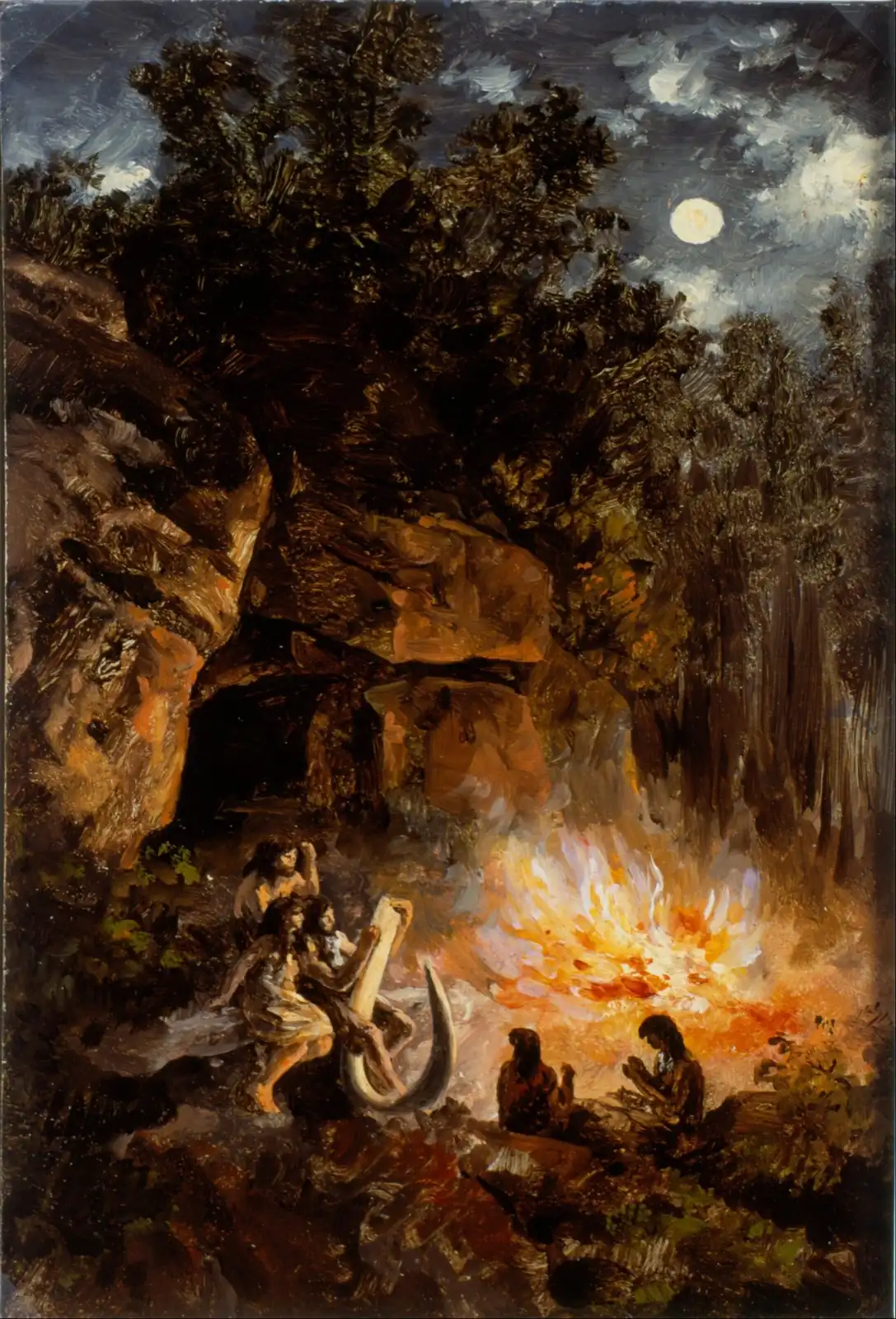
Scene from the Quaternary Upper Paleolithic Period
What you see
It is night: a full moon shines among clouds at upper right, above dark trees. On the left, a wall of rock frames the mouth of a cave. Below, a group of long-haired people gathers around an enormous curved tusk, and on the right two more, seated by the fire, appear as silhouettes.
The bonfire is the source of light: thick strokes of yellow, orange and white set the rocks and bodies aglow against the cold blue of the sky. The paint is loose and quick, as in a sketch. Seek out the white curve of the tusk, held upright by one of the figures, and the black mouth of the cave.
About José María Velasco
José María Velasco trained at the Academy of San Carlos under the Italian landscape painter Eugenio Landesio, and painted the Valley of Mexico again and again from the hills around it. He was also a naturalist who studied botany, zoology and geology; in 1879 he published a study of the axolotls of Lake Santa Isabel, a species that now bears his name, Ambystoma velasci. He won medals in Philadelphia (1876) and Paris (1889), was made a knight of the Legion of Honour, and taught perspective and landscape to Diego Rivera.
More by José María Velasco
 The Valley of Mexico from the Hill of Santa Isabel
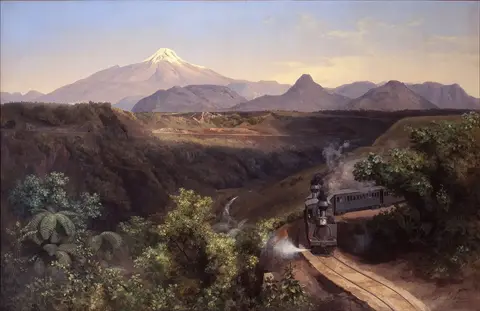 The Metlac Ravine
 The Curved Bridge of the Metlac Ravine
 The Mexico City Alameda
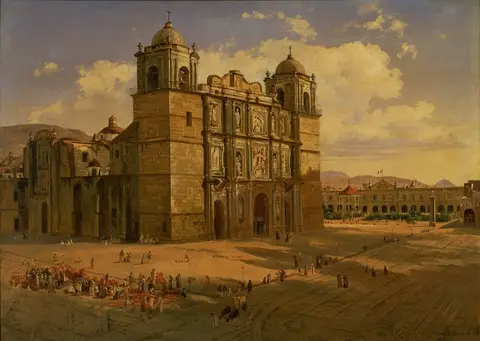 Oaxaca Cathedral
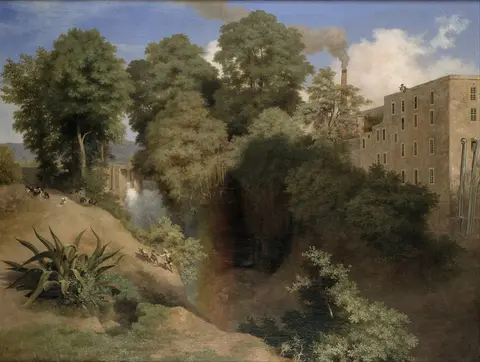 The Goatherd of San Ángel
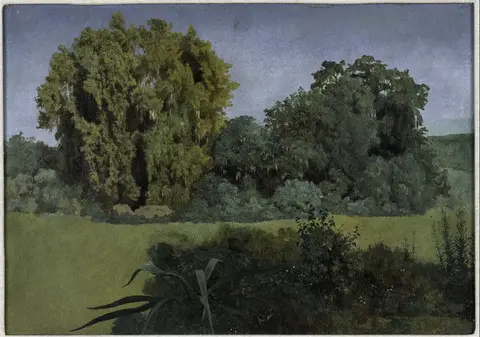 Ahuehuete (Montezuma Cypress)
 The Baths of Nezahualcóyotl
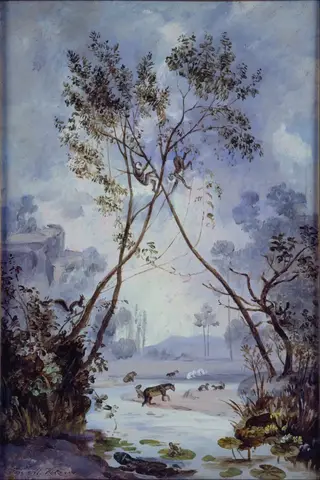 Flora and Fauna from the Miocene Cenozoic Period. Evolution of Continental Life on Earth
The Arcadópolis Museum has 443 public-domain works in 40 rooms, free to explore in 3D in your browser.