 Arcadópolis
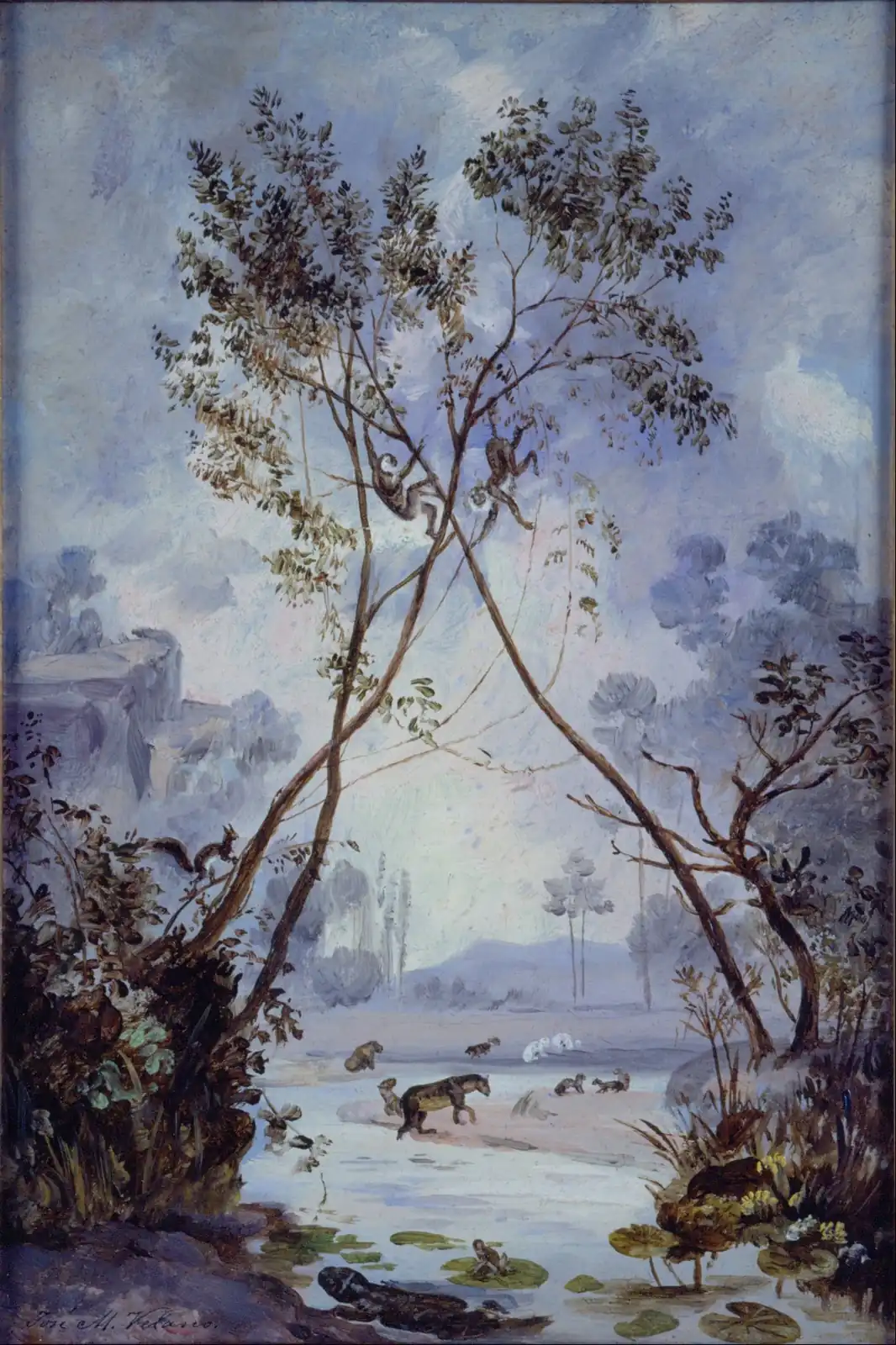
Flora and Fauna from the Miocene Cenozoic Period. Evolution of Continental Life on Earth
What you see
Two slender trees cross at the center like a giant X, framing the landscape. Two monkeys climb in their branches, and on the left a small squirrel-like creature peers out from the leaves. Below opens a lake dotted with water lilies; on the far shore stand several animals, among them a large one resembling a tapir.
A bluish lilac haze dissolves the distant rocks and trees, while those in front have crisp outlines and leaves painted one by one. Seek out the frog perched on a lily pad, the dark shape of a reptile-like animal in the water at lower left, and the painter's signature in the corner.
About José María Velasco
José María Velasco trained at the Academy of San Carlos under the Italian landscape painter Eugenio Landesio, and painted the Valley of Mexico again and again from the hills around it. He was also a naturalist who studied botany, zoology and geology; in 1879 he published a study of the axolotls of Lake Santa Isabel, a species that now bears his name, Ambystoma velasci. He won medals in Philadelphia (1876) and Paris (1889), was made a knight of the Legion of Honour, and taught perspective and landscape to Diego Rivera.
More by José María Velasco

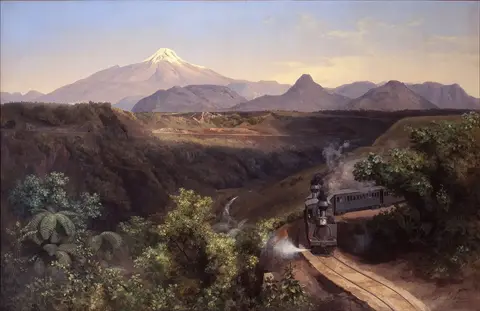


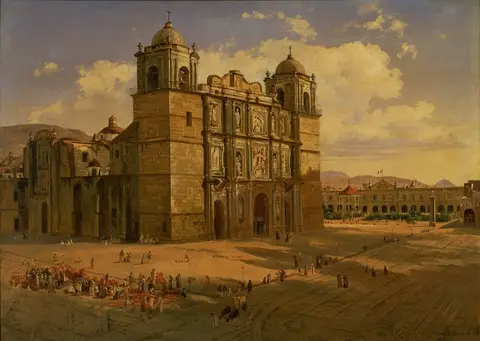
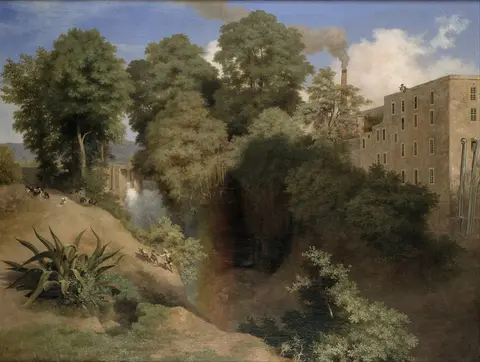

The Arcadópolis Museum has 443 public-domain works in 40 rooms, free to explore in 3D in your browser.